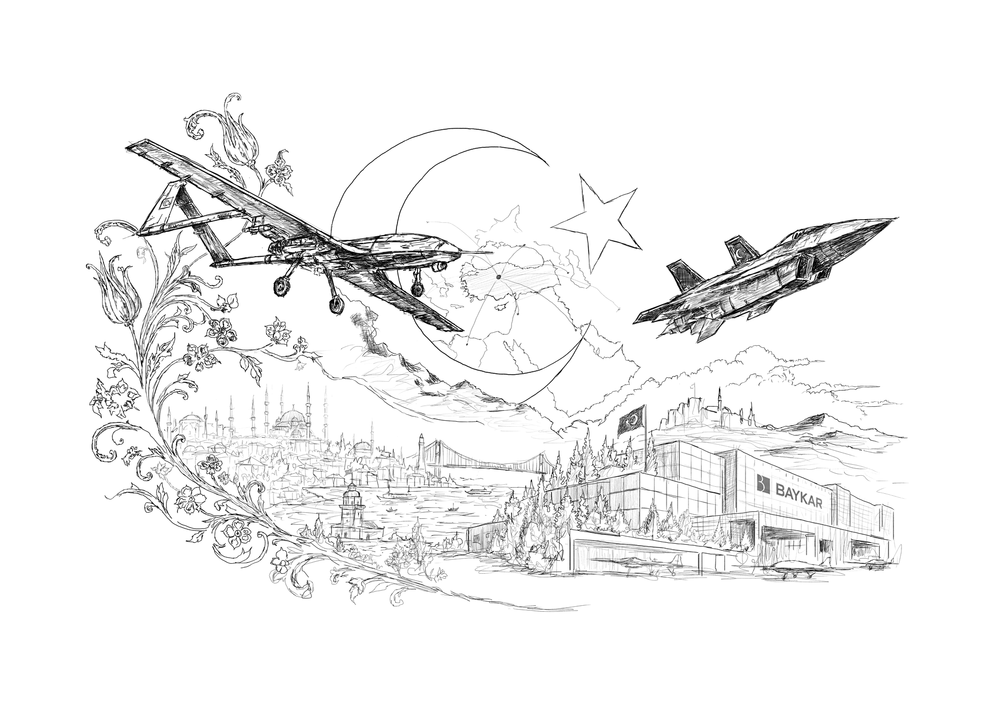
Selçuk Bayraktar, an engineer and the chairman and chief technology officer of drone manufacturer Baykar, has become the public face of Türkiye’s meteoric rise as an unmanned aerial vehicle (UAV) power. Türkiye now joins a handful of nations, including the US, China, Israel, and Ukraine, in pioneering military drone technology. This leapfrogging strategy has enabled Türkiye to make a breakthrough in its long-held aspirations to develop a military-industrial complex with greater control over the design, manufacture and maintenance of its weapons.
Behind this ambition was a strategic problem: reliance on imported weapons left Türkiye exposed to foreign export restrictions. Developing a domestic defence industry meant building the firms, engineering skills and supply chains needed to design, produce and maintain military equipment. State procurement could give those firms sustained demand, while collaboration with the armed forces could turn battlefield experience into technical improvements.
Over the past two decades, the country has gone from defence buyer to supplier: defence and aerospace exports reached $10.054 billion in 2025. Türkiye ranked eleventh among major arms exporters from 2021 to 2025, accounting for 1.8% of global exports. A 2024 report by the business association MÜSİAD put the defence industry’s domestic production capacity at 70%, while identifying continuing dependence on foreign engines, power transmission systems and semiconductors.
A significant portion of Turkish defence exports are UAVs manufactured by Baykar, the company behind the Bayraktar family of drones. Baykar (a portmanteau of Bayraktar Kardeşler—Bayraktar Brothers) now employs more than 8,500 people. Baykar’s Bayraktar TB2 UAV has become the Turkish defence industry's flagship and has played a pivotal role on battlefields from Ukraine to Karabakh, Libya, Syria, and beyond. As of January 2026, Baykar reported TB2 export contracts with 36 countries. In 2025, the company reported $2.2 billion in exports and $2.5 billion in revenue, with 88% of revenues coming from international sales.
The Bayraktar name has become synonymous with UAVs, although the TB2 is just one of many products. The range includes the high-altitude Akıncı (pronounced akinji, lit. “raider”) and the TB3, which entered the Turkish Land Forces inventory in September 2025. The jet-powered Kızılelma (red apple) continued weapons testing in 2026.
This success is not owed to one man alone. While Selçuk is the Chief Technology Officer (CTO) and public face of Baykar, the Bayraktar family, including Selçuk’s father and brothers, has played a crucial role in the company’s success. Raised on the workshop floor with a missionary belief in the importance of Turkish sovereignty (backed by military power and industry), and in the role Türkiye plays in its local region and the wider Muslim world, the Bayraktars embody the ideals of a particular Anatolian Muslim milieu.
It is to that end that the Bayraktar family’s initiatives are now transcending UAVs. Buoyed by their success, national fame, support from Türkiye’s President Recep Tayyip Erdoğan, and billions of dollars in revenue, the Bayraktar family is building an ecosystem of institutions in Türkiye that could loosely be called the Bayraktar Complex.
While Baykar engineers drones, the Bayraktar Complex aims to engineer a new culture of innovation in Türkiye, where faith, technology, and political sovereignty intertwine. However, the roots of Baykar’s success and the mission of the Bayraktar Complex can be understood only through the Bayraktar family’s upbringing and cultural milieu.
A Family Enterprise
The family patriarch, Özdemir Bayraktar (1949—2021), founded Baykar Makina (Baykar Machines) in Istanbul in the 1980s as a subcontractor producing automotive components. Its computer numerical control (CNC) machine tools used programmed instructions to cut and shape parts. The son of a fisherman from Trabzon, he graduated from Istanbul Technical University (ITU) with an engineering degree.
The family matriarch, Canan, is an economist and computer programmer. She graduated from Istanbul University’s Faculty of Economics in 1971 and began her career at the Industrial Development Bank of Türkiye. Canan is reportedly one of Türkiye's first female computer programmers.
Özdemir and Canan married in 1977 and had three sons: Haluk Bayraktar (born in 1978), Selçuk Bayraktar (1979), and Ahmet Bayraktar (1983). The couple’s academic and professional backgrounds deeply influenced their sons, who were exposed to machine tools and software programming from a young age. Because Özdemir was also an amateur pilot, they developed an interest in aeronautics. However, it was Selçuk, the middle child, who would become the technical prodigy.
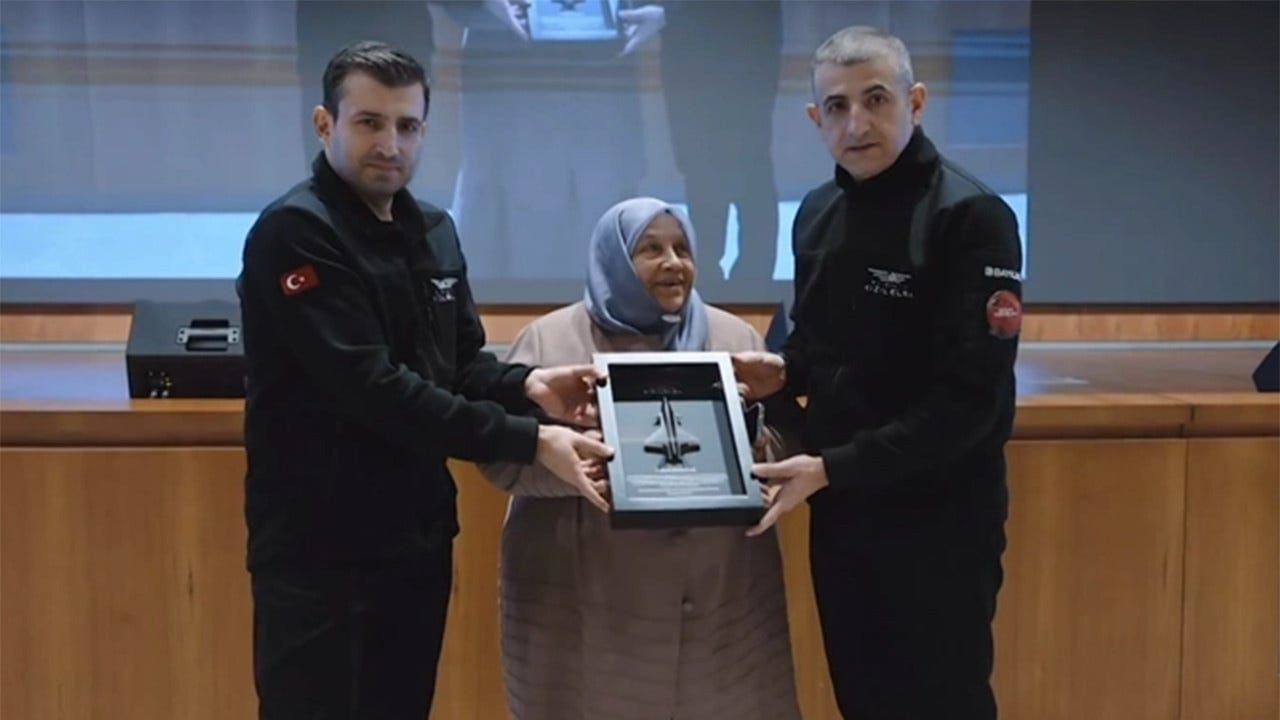
In the 1990s, Selçuk attended Robert College, an elite American-founded secondary school in Istanbul. He graduated in 1997 and stayed in Türkiye to pursue his bachelor’s degree in electronics and communications engineering at Istanbul Technical University (ITU). Only after graduating from ITU in 2002 did Selçuk go to America to study.
Throughout his youth, Selçuk had tinkered with remotely controlled aircraft. This interest grew into an obsession with UAVs, combining his father’s experience with machine tools and his mother’s software knowledge. He pursued this interest at ITU, impressed academic researchers, and earned a scholarship to attend the University of Pennsylvania in 2002. That academic path soon converged with a shift already underway in the family business.
In the early 2000s, Baykar began developing unmanned aircraft. Selçuk and Özdemir shared an interest in aeronautics and decided to refocus the family business on UAV technologies. Selçuk earned a master’s degree in electrical engineering at Pennsylvania in 2004, where he flew two drones in formation at the Fort Benning Army base in Georgia. He then earned a second master’s degree in aeronautics and astronautics at MIT in 2006, where he worked on automated helicopter landings on steeply inclined surfaces. His adviser, Eric Feron, remembered him as a dedicated craftsman and an observant Muslim.
For the young Selçuk, 9/11 and the subsequent ‘War on Terror’ were defining events. He watched as American Predator drones were deployed in Afghanistan and Iraq, often causing great civilian casualties. Selçuk engaged in social activism with other graduate students. However, unlike them, Selçuk was not content to be a mere activist. In Predator drones, he saw both the challenge American air power posed and an opportunity. While still enrolled at MIT, he began building prototype drones on the Baykar factory floor in Istanbul.
Meanwhile, Özdemir lobbied the Turkish government to support Baykar’s efforts to develop UAV technology. In this context, Bayraktar’s cultural milieu was essential. Özdemir hailed from the Millî Görüş (National View) movement of Turkish-Islamic nationalism, pioneered by Necmettin Erbakan, a mechanical engineering professor and Prime Minister of Türkiye in the 1990s. Erbakan emphasised the need for an ‘Islamic industrialism’, promoting industrial production and military self-sufficiency to protect Turkish sovereignty. The Turkish invasion of Cyprus in 1974 and subsequent Western sanctions on military exports to Türkiye critically exposed the country’s dependence on the West for its defence industry.
In 1996, Erbakan became Türkiye’s Prime Minister, but the Turkish military pressured him to resign in 1997 in what became known as the “postmodern coup”. In 1998, his party was banned for violating the constitutional separation of religion and the state. One of his protégés, Recep Tayyip Erdoğan, learned lessons from the coup against Erbakan. Erdoğan’s Justice and Development Party (AKP) won the 2002 election, and he became Prime Minister in 2003.
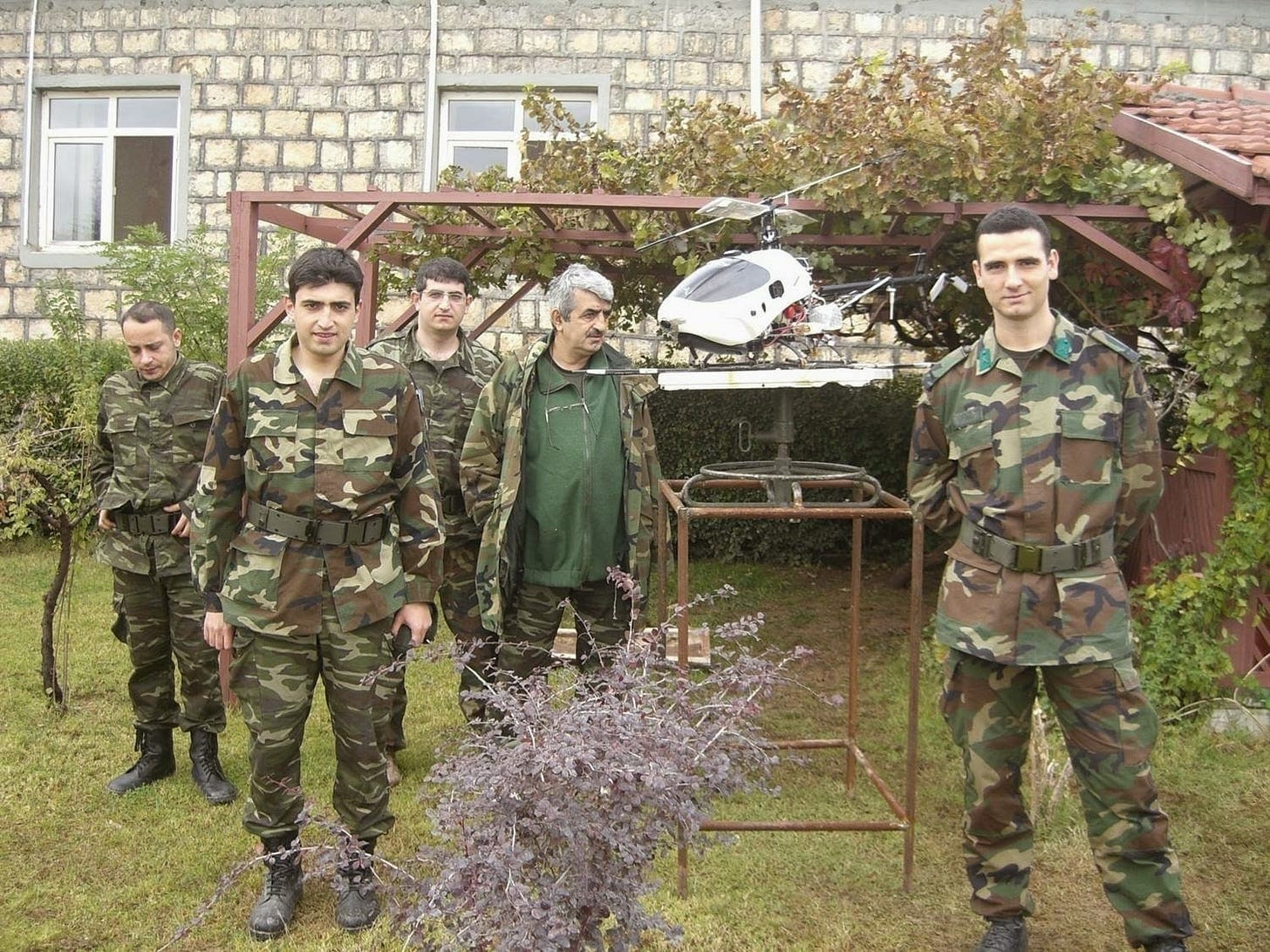
Özdemir had close ties to both Erbakan and Erdoğan, whom he had advised during his years in Istanbul politics, and worked to secure government support for Selçuk’s drones. By the mid-2000s, Selçuk split his time between his studies in the USA and embedding himself in the Turkish military, where he personally oversaw the development and test deployments of the hand-launched Bayraktar Mini UAV, amid the sub-zero temperatures and harsh mountain terrain of southeastern Anatolia.
In 2007, Selçuk left his doctoral studies at Georgia Tech and returned permanently to Türkiye to serve as Baykar’s CTO. His brother Haluk joined in 2004 as an engineering manager; Ahmet handled finance, while Özdemir led design efforts.
The Sky’s the Limit
Türkiye ordered 10 Heron UAVs from Israeli manufacturers in 2005. With the country dependent on imported drones and unable to acquire US-made Predators, Baykar would have the backing of the government and military to develop domestic UAVs.
The Mini UAV entered the Turkish military’s inventory in 2007. For decades, the Kurdistan Workers’ Party (PKK), designated as a terrorist organisation by Türkiye, the EU, and the USA, among others, had led an insurgency in Türkiye’s southeastern regions, where the Turkish military struggled to operate owing to the rugged terrain. This favoured the PKK’s asymmetrical warfare tactics.
Baykar developed the TB2, which entered Türkiye’s military inventory in 2014. It could provide live battlefield intelligence and completed its first guided-munition firing tests in 2015. By 2016, it was flying combat missions, giving Turkish forces an aircraft that could watch remote areas and strike PKK fighters from the air.
Selçuk married Sümeyye Erdoğan, the president’s daughter, in 2016, two years after the TB2 entered Türkiye’s military inventory. The marriage joined the family’s growing industrial prominence to the centre of political power. Erdoğan gained a visible achievement around which to promote his promise of national technological independence, while the Bayraktars gained a place within the presidential family. Their company’s rise had already brought together Özdemir’s political relationships, Selçuk’s engineering work and the military’s demand for domestic aircraft. The foundations and educational programmes now extend that relationship between industrial ambition and political power into a much wider part of Turkish society.
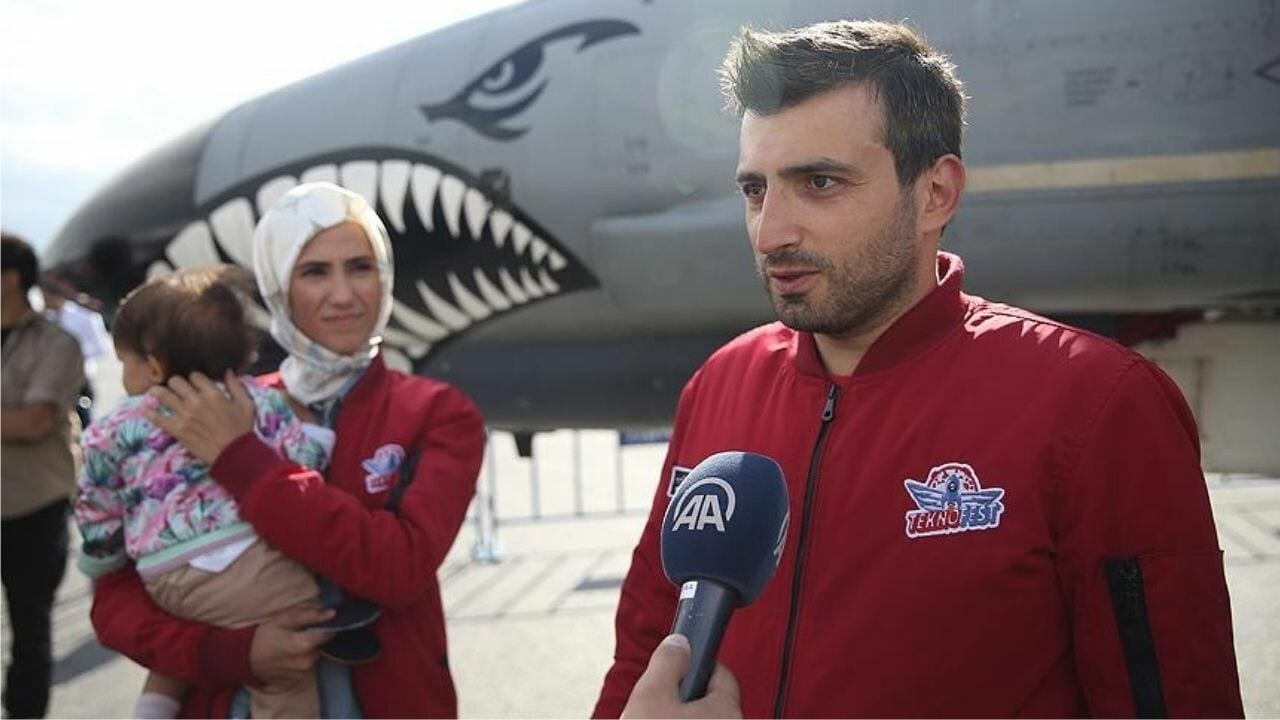
The TB2 has become a crucial, and in some cases decisive, weapon of war on several battlefields. Since 2016, the Turkish military has launched several operations across northern Syria and Iraq, aimed at further degrading and destroying the PKK’s leadership and operational capacity. UAVs have been essential to the Turkish military’s ability to fight in the extremely rugged and mountainous terrain in which the PKK has built its bases.
In May 2025, the PKK announced its intention to disarm and disband. Türkiye’s parliament passed legislation in August 2026 to support the process. In October, the Associated Press reported, citing Anadolu, that militants had withdrawn from four camps in northern Iraq; implementation of the peace process remained conditional on verified disarmament and dissolution.
In 2020, Turkish UAVs played a decisive role in Azerbaijan’s war with Armenia, in which the Azerbaijanis were victorious. Both Selçuk and Haluk would receive the ‘Karabakh Order’ award from Azerbaijan’s President Ilham Aliyev in recognition of their services.
In 2022, Russia’s invasion of Ukraine brought further international attention to the TB2 and Türkiye’s drone industry. Baykar began building a factory near Kyiv, but Russian strikes damaged the nearly completed facility in August 2025. The company pledged to repair it; a July 2026 report still described the plant as unopened. The TB2’s use in Ukraine also gave Baykar a wider public following: in September 2022, President Volodymyr Zelenskyy praised the company’s contribution to Ukraine’s resistance and said its name was known throughout the country.
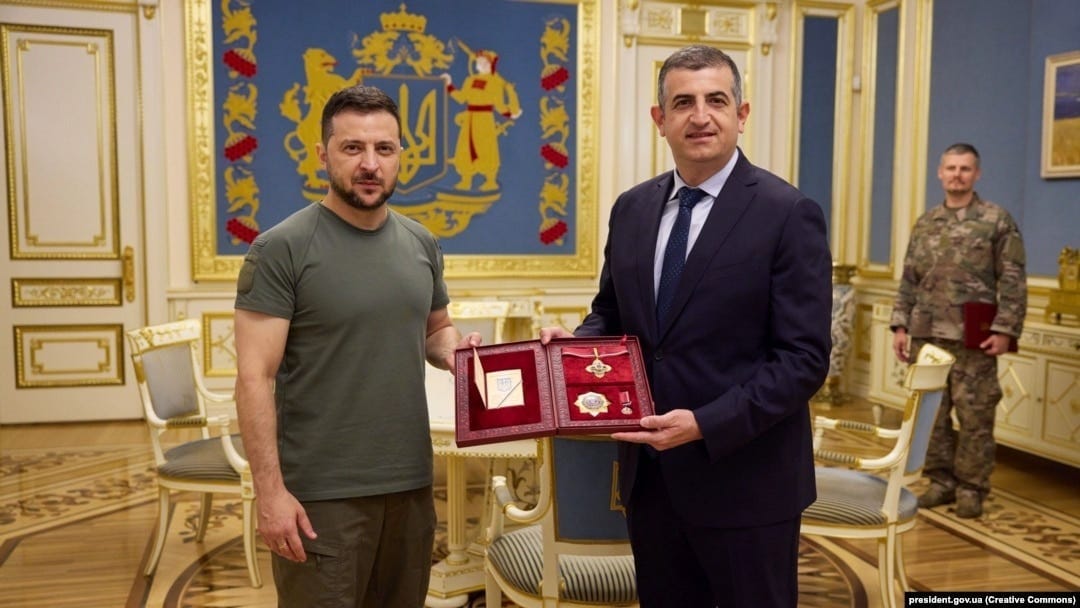
As the Turkish military footprint expands, so does its influence through what has been called ‘drone diplomacy’. However, while the Turkish state prefers a balancing strategy between nations to protect its interests and avoid entanglements, Baykar has developed its own diplomatic portfolio. Haluk, the eldest of the three Bayraktar brothers and the company’s CEO, is primarily responsible for building close relationships with UAV clients. In particular, Bayraktar has become a household name in Ukraine, where Baykar has unabashedly sided with the Ukrainians against Russia. This gives the Turkish state an added layer of plausible deniability when it chooses to use UAV exports—as a carrot or a stick.
The Bayraktar Complex
Selçuk chairs the board of trustees of the Türkiye Technology Team (T3) Foundation, which organises much of the family’s educational work. T3 co-organises Teknofest, an aviation, space and technology festival, with Türkiye’s Ministry of Industry and Technology. It also co-organises Take Off, a summit bringing together founders, investors and technology companies. Haluk chairs SAHA Istanbul, an association whose members include major defence manufacturers and the smaller firms supplying them. Across these organisations, the Bayraktars work with ministries, universities, businesses and volunteers, extending their project far beyond the family company.
The Millî Teknoloji Hamlesi, or National Technology Initiative, gives these activities a common political purpose. T3 presents the development of Turkish technology as a means of securing national independence, prosperity and a greater voice in world affairs. Its programmes ask young people to pursue that ambition through engineering, research, and entrepreneurship. The emphasis on industrial strength and national independence recalls Erbakan’s programme, while the family’s religious convictions give technical work a moral significance. The engineer’s vocation belongs to a larger ambition for Türkiye and the wider Muslim world.
Teknofest’s competitors develop rockets, unmanned aircraft, autonomous vehicles and software, preparing their projects for contests organised with technology companies and universities. The festival has travelled beyond Istanbul to other Turkish cities, Baku and northern Cyprus. More than a million people visited its September 2025 Istanbul edition, where the competitions formed part of a public programme of air shows, exhibitions and concerts.

The aircraft and student projects give physical form to the promise of Turkish technological independence. Visitors can encounter the country’s military hardware alongside the work of young people hoping to enter its industries. Engineering gains some of the public glamour usually reserved for sport and entertainment; a student with a rocket or aircraft design becomes a figure in the national story. Selçuk describes the movement he hopes to create as a “deep wave”. Speaking at Boğaziçi University in 2022, he connected the establishment of T3 and Teknofest with an ambition to restore his civilisation’s relationship with science and technology. The festival gives that ambition an audience, a calendar and competitions to enter. Children can see older students building aircraft, while university teams meet companies whose engineers have turned similar interests into a profession.
İrem Bayraktar Aksakal, T3’s vice chair, coordinates its Entrepreneurship Centre. Selected teams can meet technical and business mentors, obtain workspace and apply to use prototyping facilities, including those at the Özdemir Bayraktar Design and Prototype Centre on Istanbul Technical University’s Ayazağa campus. The centre’s programmes cover the practical business of developing a company: managing finances, finding customers and making sales. Take Off brings founders into meetings with investors and technology companies; its organisers recorded 593 one-to-one meetings at the 2025 summit.
T3’s venture fund also invests directly in businesses. In July 2025, it announced a €250,000 investment in Nanomik Biotechnology, an Istanbul company developing biological protection products for agriculture and food. The investment formed part of a €1 million financing round intended to expand Nanomik’s research and commercial operations. The family’s educational project thus influences decisions about which technologies receive capital and which teams get the resources to keep developing them.
DENEYAP pupils spend three years working through a technical programme. In the first two years, they study robotics, electronic programming, materials science, and aviation through practical projects; the final year focuses on teamwork and prepares them for competitions and exhibitions. The programme selects pupils through examinations and operates through a partnership between T3, the ministries of Industry and Technology and Youth and Sports, and TÜBİTAK, Türkiye’s scientific research council.
At Bilim Türkiye’s science centres, families and schools book children into workshops covering subjects such as astronomy, design, agriculture and the natural sciences. The centres work with local institutions, particularly municipalities, to provide spaces where children can conduct experiments and explore subjects they encounter in school.
Baykar Science High School brings educational ambition into the school timetable. In the 2025—26 academic year, it implemented a specialist curriculum covering the basic sciences, computing and software, and aviation and space technologies. Pupils can pursue these subjects through sustained schooling, with technical education shaping the years when their interests, friendships and expectations of adult life take form.
Haluk’s work at SAHA Istanbul connects smaller manufacturers with major defence and aerospace contractors. The association runs technical training and executive education, organises business meetings and helps firms work towards the qualifications needed to enter demanding supply chains. Its aviation-industry committee, MİHENK, helped establish a domestic route to AS9100, the internationally recognised aerospace quality-management certification. Turkish accreditation and certification bodies gained the necessary authorisations, and Roketsan became the first Turkish company certified through that arrangement. Alongside SAHA Expo’s exhibitions and commercial meetings, this work reaches into the standards, management practices and supplier relationships on which aircraft production depends.
Selçuk also chairs the boards of trustees of KÜME and the Cansağlığı Foundation. KÜME supports artists, designers, and researchers, awards scholarships, and runs programmes examining technology, society, and strategic affairs. Cansağlığı, named for Canan Bayraktar, focuses on health research and public health, including genetics, immunology, oncology and psychology. The family’s institutions increasingly reach into the intellectual and cultural life surrounding technical work: what researchers study, which students receive support, and how Turkish society broadly understands technological change.
Fergani, Selçuk’s space company, carries the engineering ambition into another industry. It reported placing its sixth test spacecraft in orbit on October 20, 2026, continuing work towards a planned satellite constellation for navigation and communications. Spacecraft development joins the workshops, schools, investment programmes and foundations in a widening field of activity around the family.
The Bayraktar brothers grew up with access to tools and technical knowledge, and parents who treated engineering as a vocation. They are now giving organisational form to the education they inherited through their institutions, attempting to make some of those opportunities available to children and young adults from very different households.
Building an Industrial Society
Baykar’s account of the family patriarch Özdemir’s life recalls a business that began with a single electric drill and a founder who eventually spent years living at his workplace as the drone programme developed. It also preserves his maxim that “quality is in the details”. His sons are trying to carry that workshop ethic into institutions that can teach people who never knew him. They have attached a national mission to the habits they inherited: acquiring technical knowledge, attending closely to a problem and continuing to work until something functions.
Türkiye has already built a substantial industrial economy. Its remaining weaknesses concern the depth and distribution of its capabilities. OECD figures show the share of medium-high-technology goods in manufactured exports rising from 32.2% in 2015 to 37.5% in 2024, while the high-technology share remained around 3.5%. The Bayraktars’ programmes address this uneven development by bringing more people into technical work and supporting the organisations where their knowledge can accumulate.
Baykar’s expansion now reaches into other countries' industrial institutions. It completed its acquisition of Italy’s Piaggio Aerospace in June 2025, and its joint venture with Leonardo became operational in July 2026. Leonardo contributes electronics, systems integration and European certification capabilities to the partnership. Fergani’s latest test spacecraft reached orbit aboard a SpaceX launch. The family is increasingly pursuing its national ambitions through foreign companies, markets and specialised skills. Türkiye’s freedom of action will depend on the capabilities its firms command within those relationships and the terms on which they can continue to develop them.
The family’s political connections also place considerable responsibility on the people managing its institutions. Fund managers will need authority to decline favoured proposals; teachers will need to select and encourage able pupils; engineers will need to report failures that patrons would prefer not to hear about. Funding decisions and appointments will determine how much technical judgement survives inside organisations assembled around prominent founders. Türkiye’s total fertility rate was 1.42 children per woman in 2025, adding urgency to educating and employing the nation's available talent.
Whether the Bayraktar Complex succeeds in its mission to reshape Türkiye’s culture and, downstream, the economy depends on how seriously the Bayraktar family and their network take building an industrial society.
Words: Selim Baş is a researcher and technology entrepreneur working across deep tech, defence, and technology diplomacy. He founded the Turkish-American Technology Summit, has held leadership and coordination roles at Istanbul Technical University, and has participated in international programmes with the SAHA Defence & Aerospace Cluster and the T3 Foundation.